By Raymond Nash
Policy Review
Budget Reconciliation Can Affect Estate Planning
The Tax Cuts and Jobs Act (TCJA) of 2017 will sunset on December 31, 2025, and the Republican party has made it clear that tax cuts will be a priority for the next administration. While Republicans will hold the executive branch and a majority of the legislative branch of government, the margins are slim. The 119th Congress is likely to have a 3-seat majority in the Senate and 5-seat majority in the House. Republicans could hold only 220 seats in the House and need 218 votes to pass a new tax bill. They could hold 53 seats in the Senate but need 60 votes to pass a new tax bill.
Due to projected increases to the deficit, it is likely that a proposal to extend the TCJA will not receive the Senate supermajority necessary to avoid a filibuster. If the new administration hopes to extend the TCJA, they will most likely have to rely on budget reconciliation in 2025. To avoid violating the Byrd rule, the tax cuts would have to be scheduled to sunset in 10 years. Therefore, any tax legislation that is pushed through reconciliation for 2025 would sunset no later than the end of 2034, barring the passing of any formal legislation within that window.
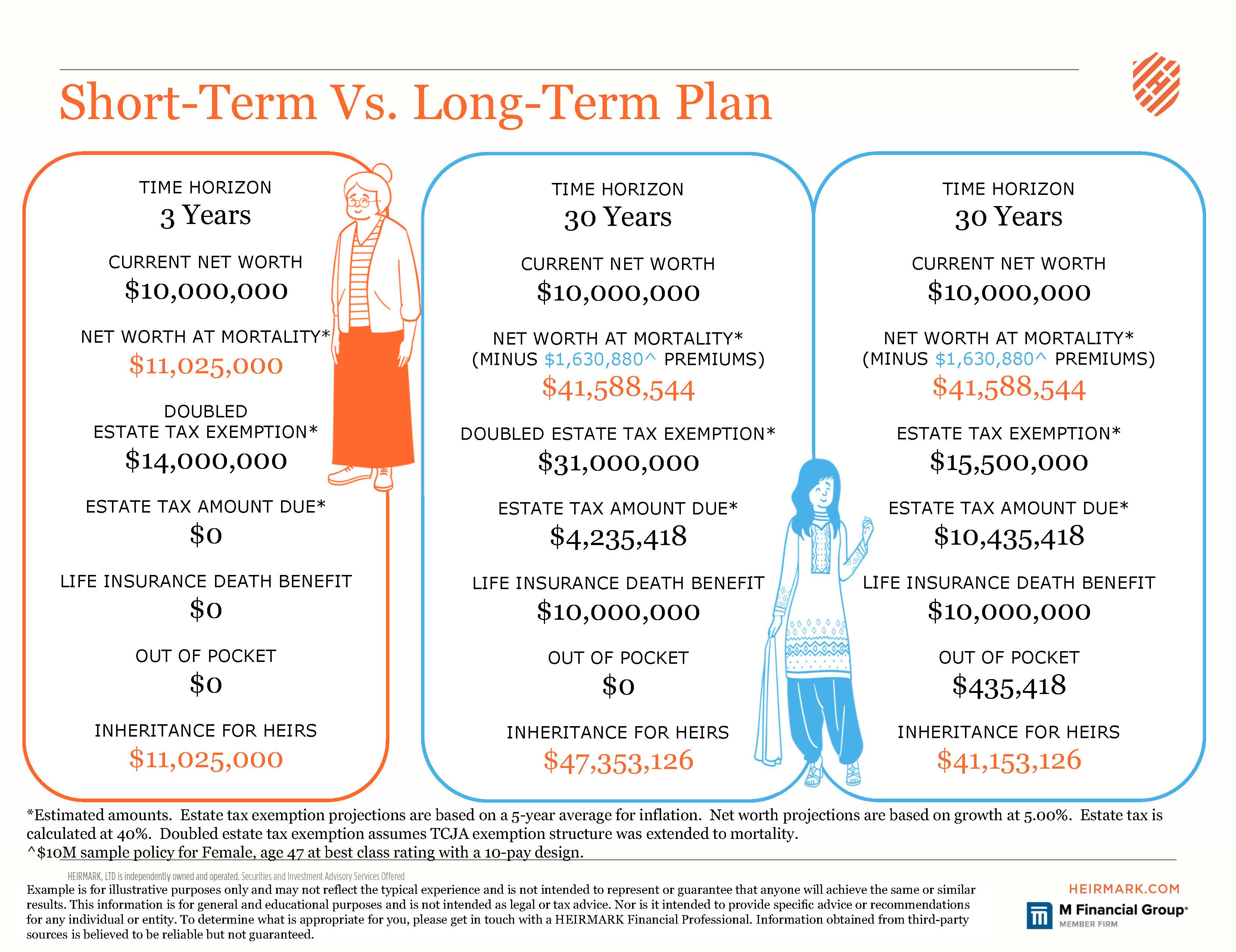
This is important when considering estate planning. The estate tax exemption limit is outlined within TCJA. Political volatility has demonstrated that each administration swings wildly on the topic of estate taxes. It’s hard to determine now if, at life expectancy, an individual’s heirs will be left with a large or small estate tax bill to pay out of their inheritance. It all depends on which party holds the majority in Congress in the years leading up to one’s mortality.
We are encouraging our clients to stay the course with their estate planning. For example, if life insurance to pay estate taxes was considered necessary before the election, it’s shrewd to consider it necessary still. The exception being any client who has a life expectancy of 10 years or less and might be over-insured, subject to the actions of Congress. We are recommending policy reviews to assess areas that need improvement, either by supplementing life insurance when coverage is insufficient for long-term planning or by considering exit strategies for policies that are no longer needed for short-term planning.
Contact us with any questions or opportunities to help you or your clients achieve identified goals. This is what we enjoy doing for only a select number of families, businesses, and charitable institutions each year, and we look forward to hearing from you.