By Raymond Nash
Using Life Insurance for ROI
Case Study – Accessing Cash Value
Smart investors know that a diversified portfolio can be the key to a successful investment strategy. Using life insurance policies for their return on investment (ROI) potential can be advantageous.
Basically, a life insurance policy converts nominal premium payments into a large death benefit, creating a high ROI. Additionally, non-guaranteed permanent policies will accrue cash value for the duration of the policy. The cash value is accumulated from the insurance carrier’s non-guaranteed crediting rate. The cash value keeps the policy inforce for its duration. At mortality, the cash value is negated when the death benefit is paid out.
For the duration of the policy, the cash value can be accessed via withdrawals or policy loans at the policy owner’s discretion. The death benefit of the policy will decrease by the amount accessed from the cash value (plus loan interest, if applicable). To use the cash value, we recommend that the policy is owned by an individual or a Spousal Lifetime Access Trust (SLAT). It’s also important to consider the MEC status and basis of the policy to calculate any applicable taxable gains. Alternatively, if the cash value permits, premiums can be decreased when using a flexible premium product. It’s important to note that altering premiums or accessing cash value might affect the duration of the policy, especially in regard to any guaranteed death benefit.
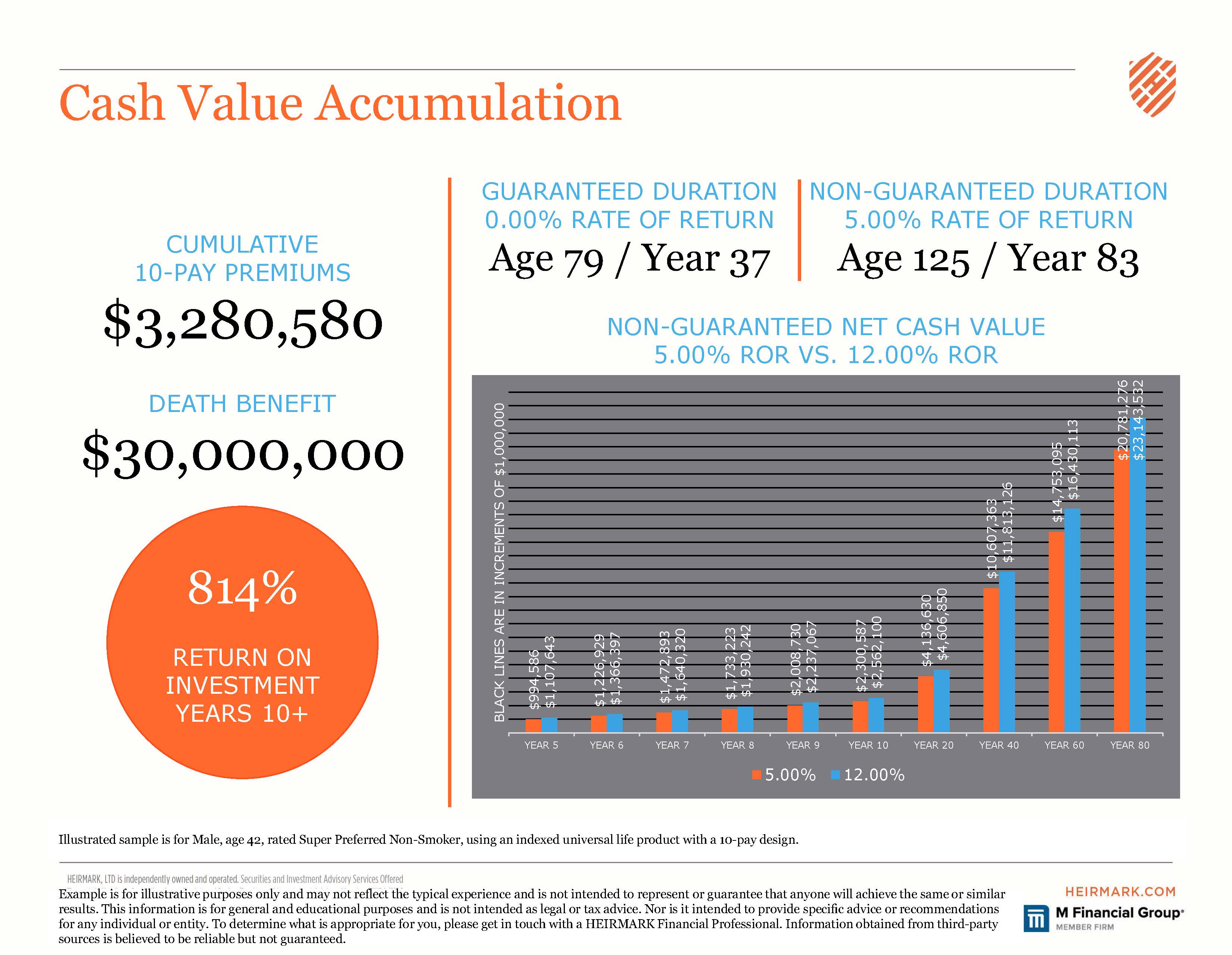
In the example below, the policy was illustrated with a 10-pay design. Total cumulative premiums of $3,280,580 were illustrated to fund a $30M death benefit for the lifetime of the client, based on an assumed crediting rate of 5.00% and current charges. When purchasing life insurance as an investment, it can be advantageous to keep the cash value lean to maximize the return. In the example below, an assumed crediting rate of 12.00% could result in over $1M of excess cash value in the policy at the insured’s age 60. If this scenario is realized, excess cash value can be withdrawn from the policy without triggering any capital gains tax, since the amount is below basis. If policy ownership is structured properly, the client can use the funds at their discretion during their lifetime, perhaps even for retirement income via an annuity, and the death benefit would be decreased by the amount of the withdrawal.
An inforce ledger should be run to determine how the policy performance would be affected by these changes, then regular policy reviews should be conducted to determine if the policy is performing to meet the client’s goals. If policy performance is unsatisfactory, more premium dollars might need to be added back to the policy in future years.
Contact us with any questions or opportunities to help you or your clients achieve identified goals. This is what we enjoy doing for only a select number of families, businesses, and charitable institutions each year, and we look forward to hearing from you.