By Raymond Nash
Life Settlements
Comparing to Other Exit Strategies
Higher estate tax exemptions might reduce the need for life insurance for individuals who have an abbreviated life expectancy. Surrendering a policy is the most obvious exit strategy, but there are some components to consider first. For example, tax consequences should be weighed before surrendering a policy. A gain report will show the basis for any policy and the tax can be calculated as ordinary income of the policy owner, not the insured. This distinction is especially important when the policy owner is an irrevocable trust or a business. It’s also important to keep in mind that whole life policies might include paid-up additions that are not included in the basis, so the gain might be larger than expected.
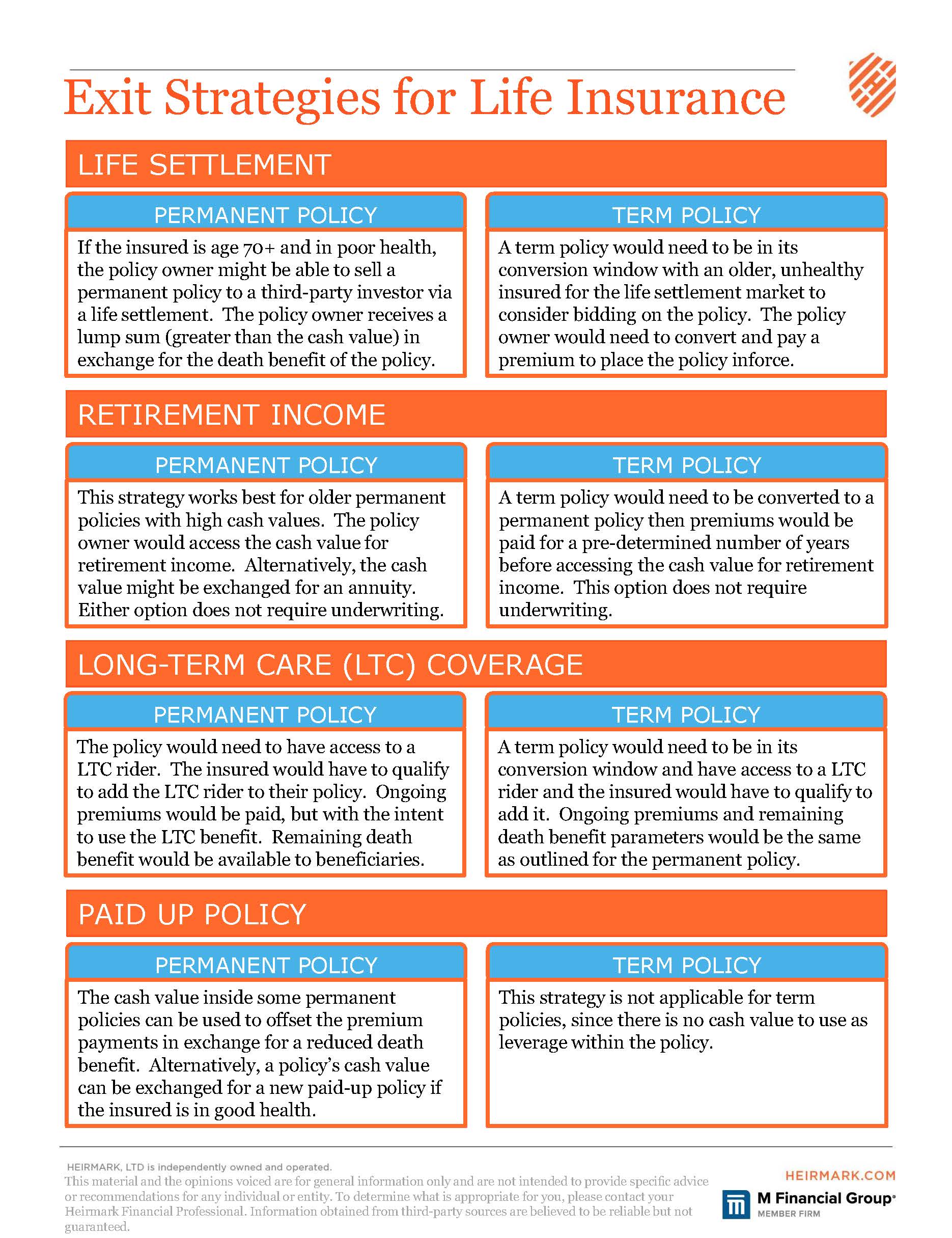
If a policy surrender is not appealing, there are several exit strategies to explore that might be more lucrative for a client. If the insured is age 70+ and in poor health, a policy owner may have the potential to sell a life insurance policy via a life settlement to a third-party investor in exchange for the death benefit. Restructuring an existing permanent policy to illustrate withdrawals and policy loans might enable policy owners to access the cash value in a policy for income. An existing policy may be restructured to add a long-term care (LTC) rider that can help cover expenses for care that is needed at home or in a nursing home, if the insured qualifies. By restructuring into a paid-up policy, policy owners might be able to eliminate or reduce future premiums while keeping a reduced death benefit inforce. For younger, healthier insureds, policy exchanges might be available when restructuring a policy for income, LTC needs, or paid-up status.
Only permanent policies have cash value that creates the opportunities to explore the exit strategies outlined above, but term policies should not simply be surrendered, either. If a term policy is within its conversion window, there are options to explore before surrendering it for an unused premium refund.
The placement of a life insurance policy marks the beginning, not the end of our client relationships. When a policy is no longer needed, we add value by navigating exit strategy options. Many advisors don’t actively manage their clients’ exit plans, but clients appreciate the advice on which option is their best fit and then need to plan on what to do with premium savings. Exit strategies are not one size fits all and they take a team effort. The pros and cons for each option should be weighed by a team of trusted advisors to craft a comprehensive exit strategy for each client.
Contact us with any questions or opportunities to help you or your clients achieve identified goals. This is what we enjoy doing for only a select number of families, businesses, and charitable institutions each year, and we look forward to hearing from you.