By Raymond Nash
Inflation Affects Life Insurance
Loan Rescue Example Case
When the policy owner takes a loan from a policy, inflation can increase the loan interest rate, which can substantially increase the loan balance year after year. Large loan balances, rising loan interest rates, and decreasing dividends can potentially cause a policy to lapse. Depending on the fact pattern, this could create unexpected and potential taxable income to the policy owner. If the policy owner cannot pay the full loan amount back to the policy, loan interest payments can be paid on top of premium payments to keep the policy going.
Alternatively, a policy with a loan balance can be moved via a 1035 Exchange to a new policy. The policy owner generally has two options for the 1035 Exchange: (1) pay the loan balance with the cash value before it is rolled over to a new policy, potentially lowering the death benefit or (2) choose a new policy with a lower loan interest rate and roll the loan over with the cash value. Heirmark has access to a product that has a loan rate of 2.25% with a credit of 2.00%, making the net loan interest rate 0.25%; this product can work well for a loan rescue.
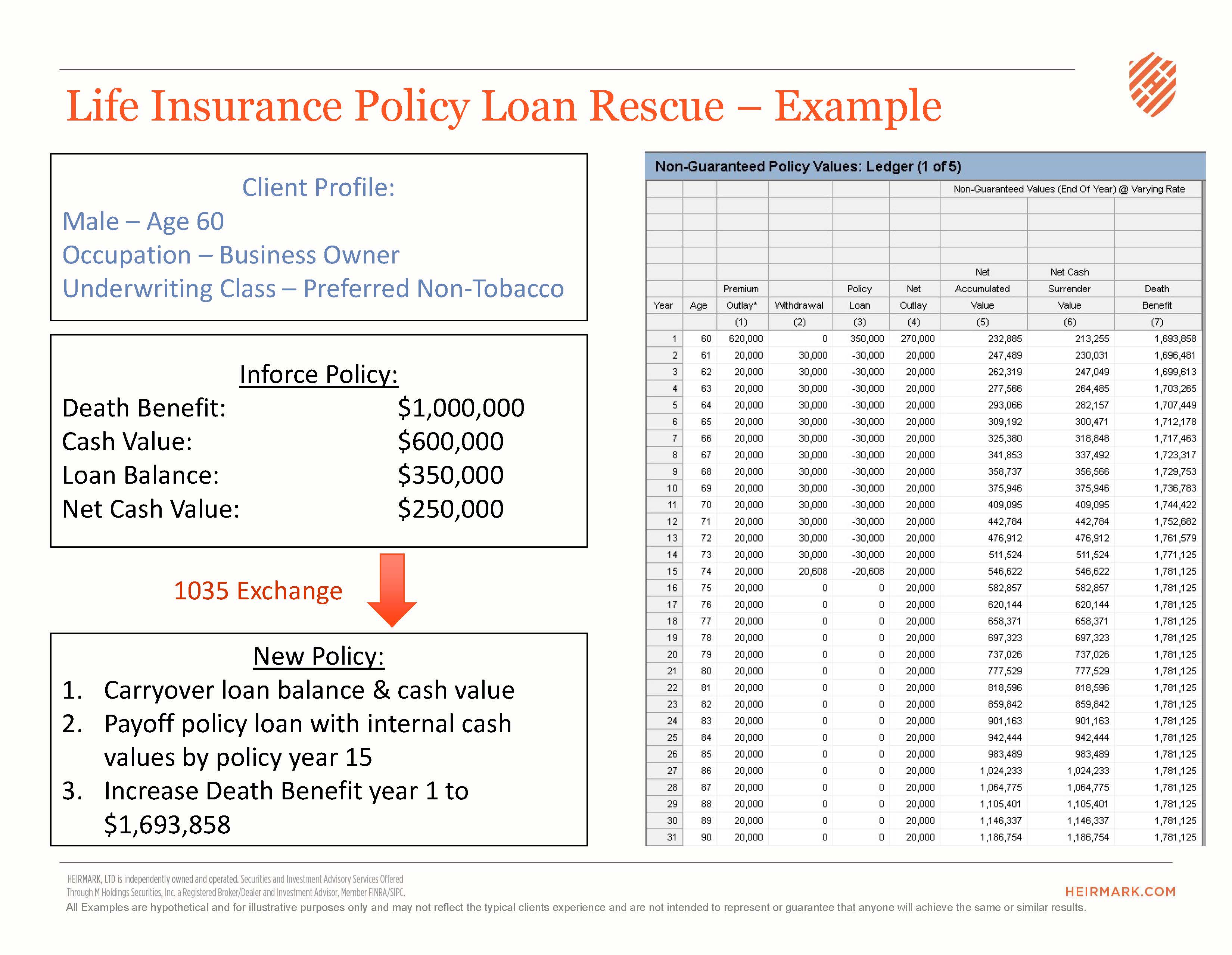
As an example, the graphic below demonstrates rolling the loan over to a new policy. The analysis shows paying off the loan in 15 policy years. Plus, the death benefit increases from $1,000,000 in the old policy to a death benefit starting at $1,693,858 in the new policy.
The pros and cons of each option should be evaluated with a trusted insurance source to help the policy owner make an educated decision. If your clients have a cash value policy with an outstanding loan, we recommend a policy audit. Contact us with any questions or opportunities to help your clients achieve their goals. This is what we enjoy doing for only a select number of families, businesses, and charitable institutions each year, and we look forward to hearing from you.