By Raymond Nash
Ultimate Gift Guide
Optimizing the Gift Tax Exclusion
Research indicates that approximately one-third of participants in The Great Wealth Transfer have not engaged in robust estate planning, often neglecting to create a will or trust for directing their wealth transfer. Even those who have completed their planning might need to revisit their documents as family dynamics and tax legislation are continually evolving. While this planning can seem overwhelming, framing the establishment and maintenance of an estate plan as the ultimate gift to family members can help motivate action. Advisors have the opportunity to position themselves as gift guides, assisting clients in turning their Wish Book into reality.
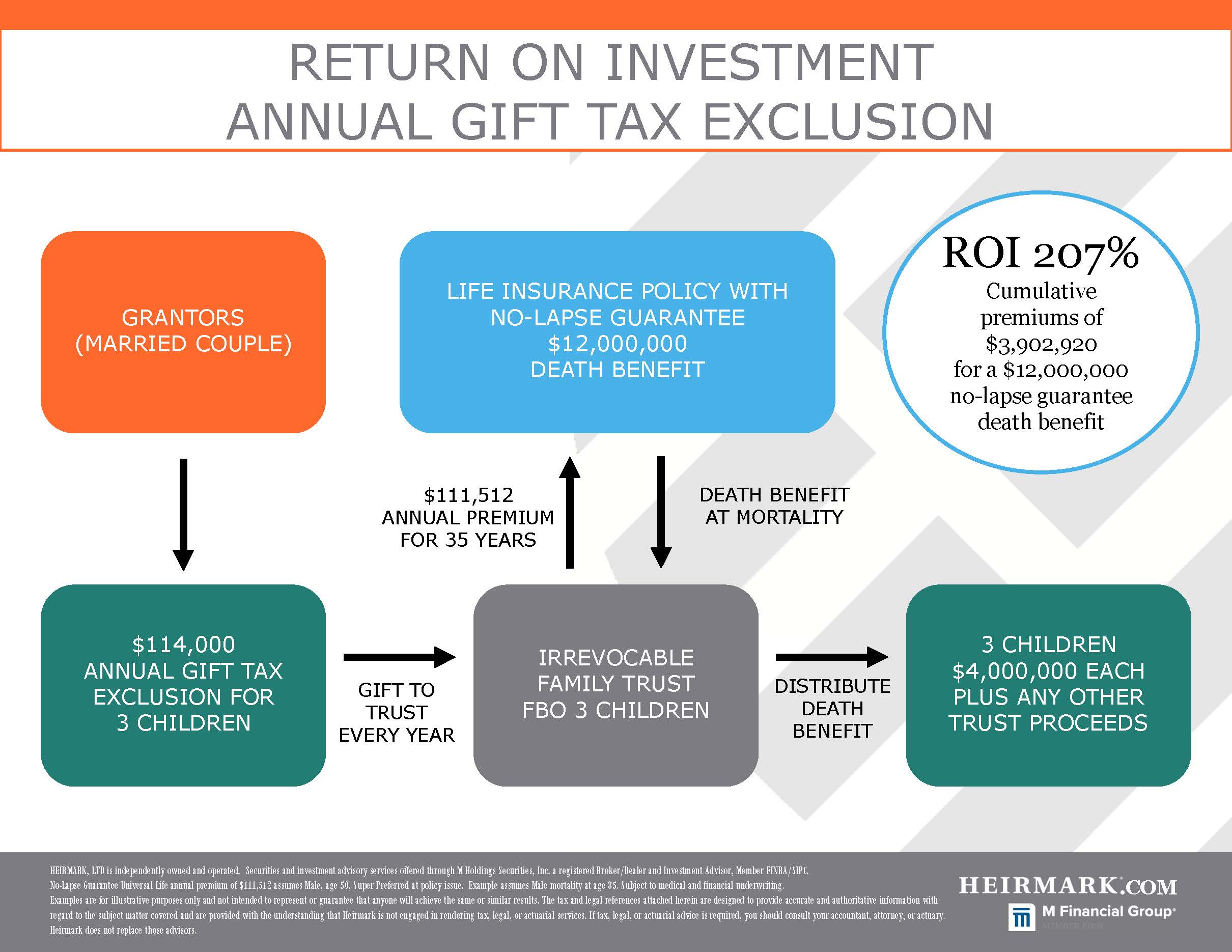
December is a month filled with gifts of all kinds, from tangible items wrapped in beautiful bows to the intangible gift of future wealth transfer. In the U.S., individuals can gift up to $19,000 per recipient annually without incurring a gift tax or utilizing their lifetime exemption. For married couples, this amount doubles to $38,000 per recipient each year. Many ultra-affluent individuals choose to gift the annual gift tax exclusion amount into a trust, allowing for distribution to heirs at a later date. But once the money is gifted, how can it be optimized for financial planning?
One strategy to consider is using those gifted funds as premium dollars for life insurance. This approach can result in a larger distribution to heirs or assist in covering estate taxes. Life insurance is funded with discounted dollars through premium payments, which yield a death benefit significantly larger than the premiums paid. When coordinated through a trust, these funds remain outside of the taxable estate. Life insurance proceeds can be noncorrelated, tax-free, and provide guarantees.
Life insurance serves as a vital component in a comprehensive financial strategy. For ultra-affluent individuals, market exposure can yield significant rewards, but it also comes with inherent risks. By integrating life insurance into their financial planning, clients can engage in more aggressive investment strategies during favorable market conditions. This approach allows them to maintain a safety net, enabling rational decision-making during periods of market volatility. Balancing risk with predictability is key to effective financial management.
Contact us with any questions or opportunities to help you or your clients achieve identified goals. This is what we enjoy doing for only a select number of families, businesses, and charitable institutions each year, and we look forward to hearing from you.