By Raymond Nash
Life Insurance Taxation Nuances
Retirement Planning
We all know Benjamin Franklin’s famous words, “In this world nothing can be said to be certain, except death and taxes.” While this statement remains true, tax laws continue to flux, evolving the amount of income, capital gains, estate, state-level, property, etc. taxes that are due each year. While the 2025 tax law did not have a drastic effect on the insurance industry as a whole, there are some tax-related nuances to consider when adding insurance products to a financial portfolio or when auditing existing policies.
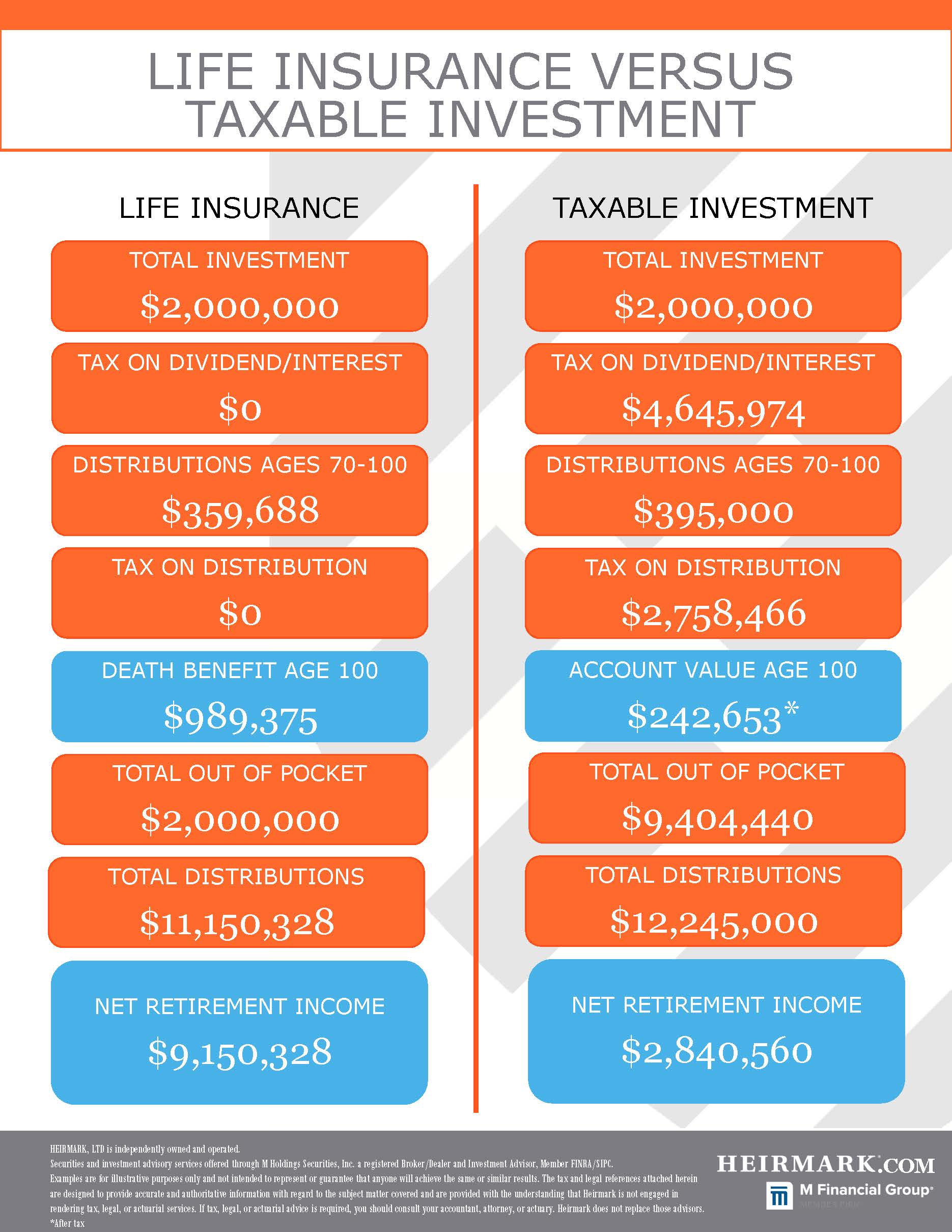
When using life insurance for retirement planning, the tax-related nuances are favorable. Life insurance grows the cash value inside the policy without incurring tax on the interest. Likewise, distributions can be made from the cash value by way of withdrawals and policy loans on a tax-free basis. The policy loans are subject to loan interest, which can be left to accrue in the policy as long as the cash value allows it.
A taxable investment can incur tax on dividends/interest on an annual basis at ordinary income rates and incur long-term capital gains tax (on any amount above cost basis) when the investment is sold for income. Additionally, Medicare/NIIT and state/local taxes can be assessed. After taxes, the net amount of retirement income can be substantially less than expected when relying on a taxable investment.
Consider supplementing an established retirement plan with life insurance instead. When traditional retirement income vehicles (qualified plans or 401(k)) have reached their contribution limits and more planning is needed, there is no restriction to adding a separate life insurance policy to existing qualified plans.
In the example below, we have mapped out the difference between a taxable investment and a life insurance policy, considering the same $2 million deposit (spread out over 4 years). The overall difference in net retirement income is striking, even though the taxable investment might allow for a higher annual distribution. In this scenario, we are assuming the 50-year-old healthy client is in the top income tax bracket, and we have modeled the example at a conservative 6.00% return on the investment. The same non-guaranteed rate of growth would be applicable to either scenario. Both scenarios assume retirement income is taken from age 70 to age 100 at the client’s mortality. The death benefit / account value would be available to heirs after the retirement income is deducted.
Contact us with any questions or opportunities to help you or your clients achieve identified goals. This is what we enjoy doing for only a select number of families, businesses, and charitable institutions each year, and we look forward to hearing from you.