By Raymond Nash
Section 70106 of H.R. 1 Tax Law
Avoiding Reciprocal SLATs
On July 4, 2025, Section 70106 of H.R. 1 was signed into law, creating a blueprint for future estate planning. Starting January 1, 2026, the federal estate and gift tax exemption has been established at $15 million for individuals and $30 million for married couples. These limits do not have an impending sunset and are indexed for inflation, so affluent households can make plans around these amounts. Those who discover that their heirs will incur a large federal estate tax can use discounted dollars to pay premiums on life insurance, earmarking the death benefit to offset the tax burden.
When considering the new tax law, a thorough review of an estate plan is prudent. As part of the estate planning review, established trusts should be audited to determine if they still meet the needs of each family, and new trusts should be considered for long-term planning.
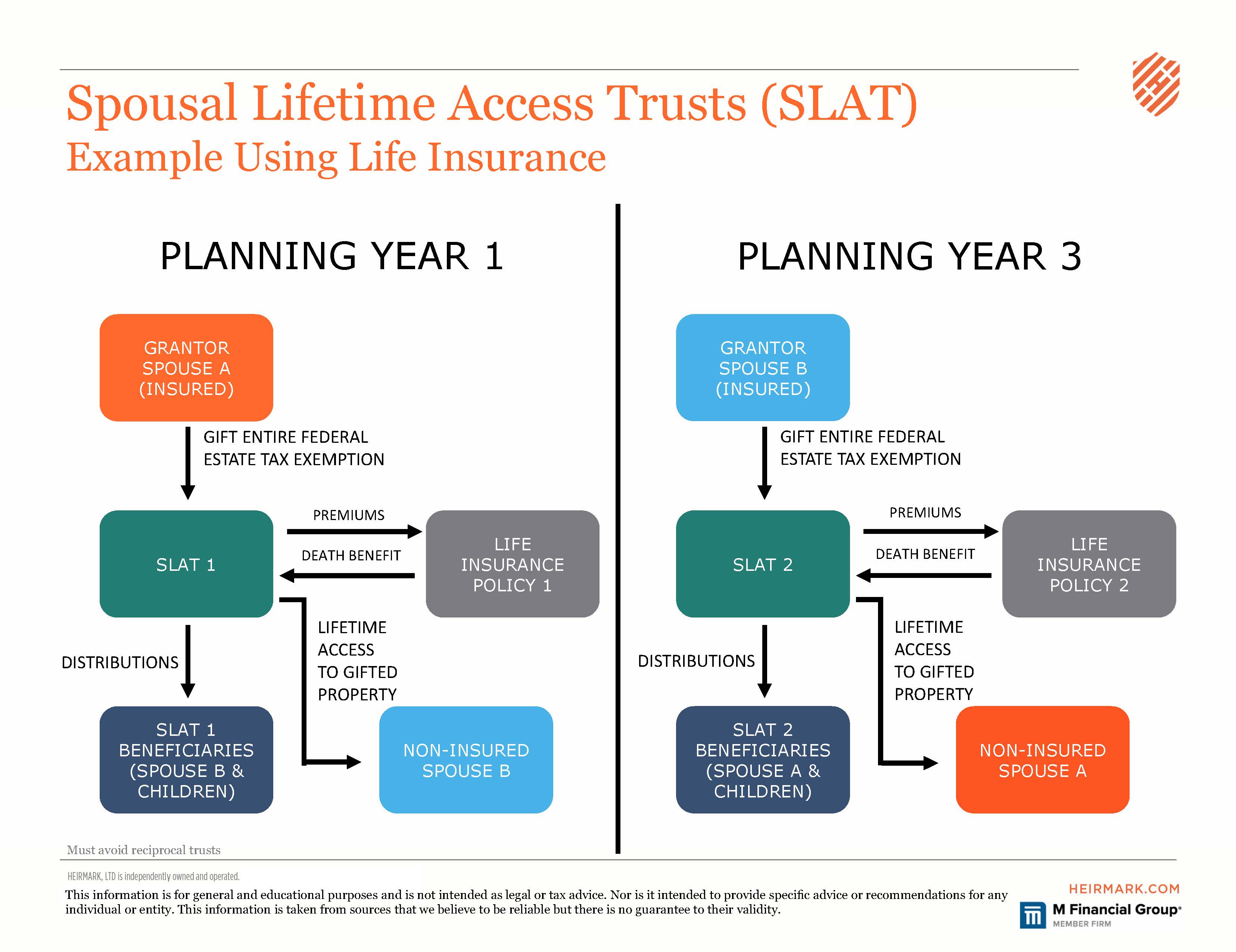
Establishing a Spousal Lifetime Access Trusts (SLAT) for each spouse can create flexibility when accessing assets gifted to the trusts. In general, a SLAT involves one spouse (the grantor) establishing a trust for the benefit of the other spouse (the spousal beneficiary) and their children. The grantor spouse then gifts his or her entire federal estate tax exemption amount to the trust. Since the other spouse is the beneficiary of the trust, the couple continues to have access to the gifted property.
A SLAT can be designed to own life insurance on one grantor’s life where the grantor spouse uses annual gifting and/or lifetime gift tax exemption to make gifts to the SLAT. The non-grantor spouse can be a co-trustee, along with an independent trustee. The trustee purchases a life insurance policy on the grantor spouse’s life, outside of the estate, and the death benefit is paid to the SLAT at the grantor spouse’s mortality.
When establishing a SLAT for each spouse, the advisor must avoid reciprocity (establishing an arrangement where the spouses would be in the same place economically as they would be if they were to name themselves as their own trust beneficiaries). Triple trusts have been used to break reciprocity in the past, but the new tax law could create a simplified path.
A benefit of the new tax law is the certainty it provides to get planning done, granting time to implement a long-term plan over several years for a more measured approach. This elongated timeline makes it easier to avoid reciprocity when spouses are establishing SLATs. Establishing one SLAT for Spouse A then waiting a few years to establish a second SLAT for Spouse B makes it harder for the IRS to interrelate the two trusts, since one spouse would be economically disadvantaged for a few years.
Contact us with any questions or opportunities to help you or your clients achieve identified goals. This is what we enjoy doing for only a select number of families, businesses, and charitable institutions each year, and we look forward to hearing from you.