By Raymond Nash
Women’s History Month
Retirement Planning for a Divorcée
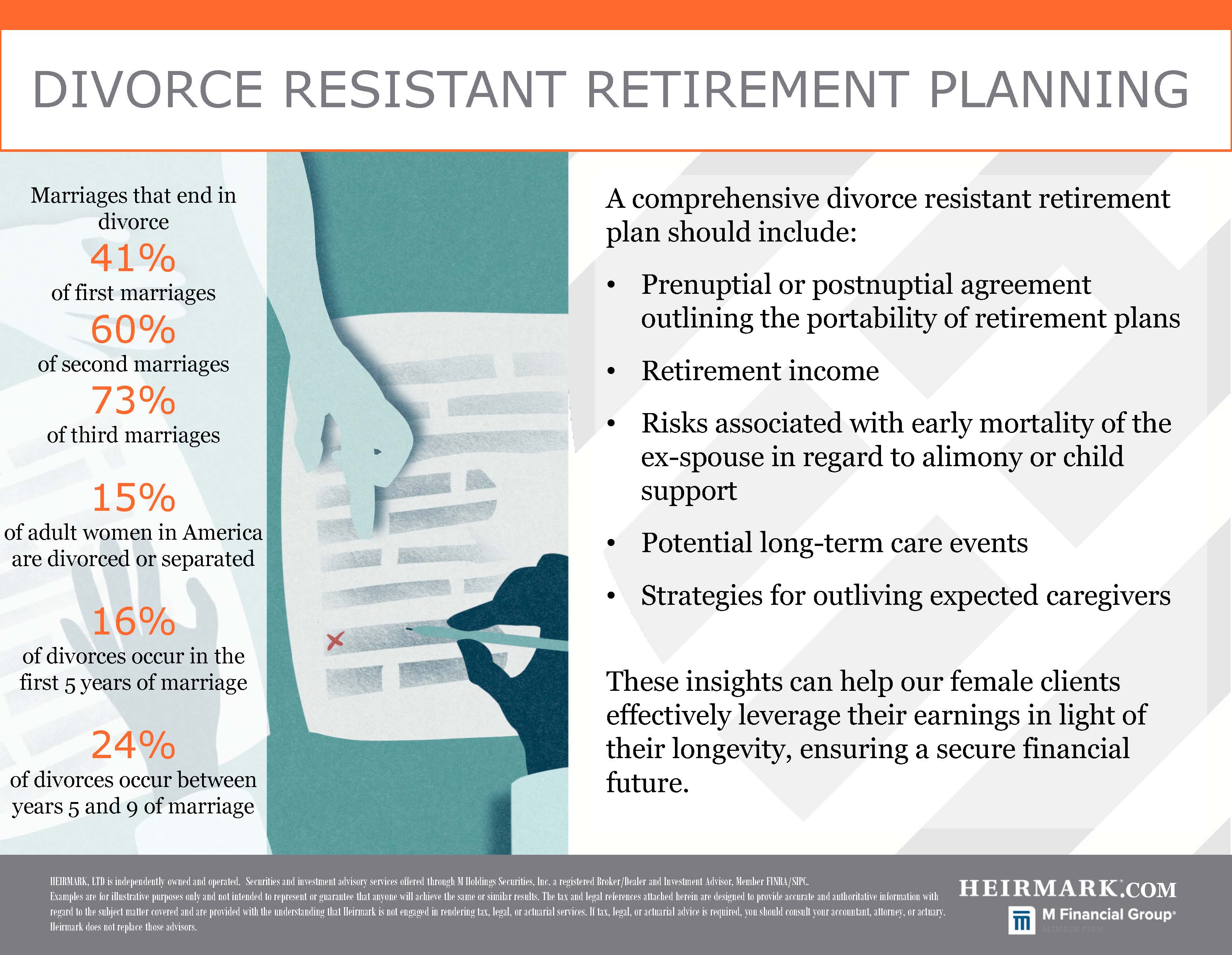
In honor of Women’s History Month, we are focusing on niche financial planning areas that specifically concern women. Exploring financial options for female clients involves addressing unique challenges posed by the pay gap, resulting in fewer dollars earned and subsequently fewer dollars available for investment. Additionally, women often outlive men, necessitating a plan for increased retirement savings. Caregiving roles also significantly impact financial planning. Women who dedicate their time to care for children or aging parents instead of pursuing a salaried career, may find themselves short on retirement funds or needing care later in life, underscoring the importance of retirement and long-term care planning.
Historically, women relied on men for financial security and were tied to marriage. Since the legalization of no-fault divorce in 1969 and the granting of more financial independence for women in October 1974, women have gained the freedom to divorce. A prenuptial or postnuptial agreement that directs the wage-earner spouse to fund a retirement plan for the non-earner spouse can be crucial. Even if a marriage does not end in divorce, the unexpected death of the wage-earner spouse can lead to significant financial challenges. It’s estimated that 70% of divorces are initiated by women, and having a safety net for retirement can ease difficult decisions. Furthermore, “gray divorce” (for those over age 50) has doubled since 1990, making it vital for individuals in or approaching retirement to consider their options carefully if they don’t have a retirement safety net.
Permanent life insurance stands out as a valuable tool in this context. It offers tax-free growth of premium dollars within the policy, allowing clients to retain more funds that would otherwise be subject to capital gains tax. For retirement planning, clients can access tax-free distributions from the growth within the policy, with taxes applying only once the basis amount is exceeded. Additionally, adding a qualified long-term care rider to a permanent life insurance policy can provide a living benefit that is typically income tax-free, provided the per diem cap is not exceeded.
We welcome any questions or opportunities to assist you or your clients in achieving identified goals. We take pride in serving a select number of families, businesses, and charitable institutions each year, and we look forward to hearing from you.